
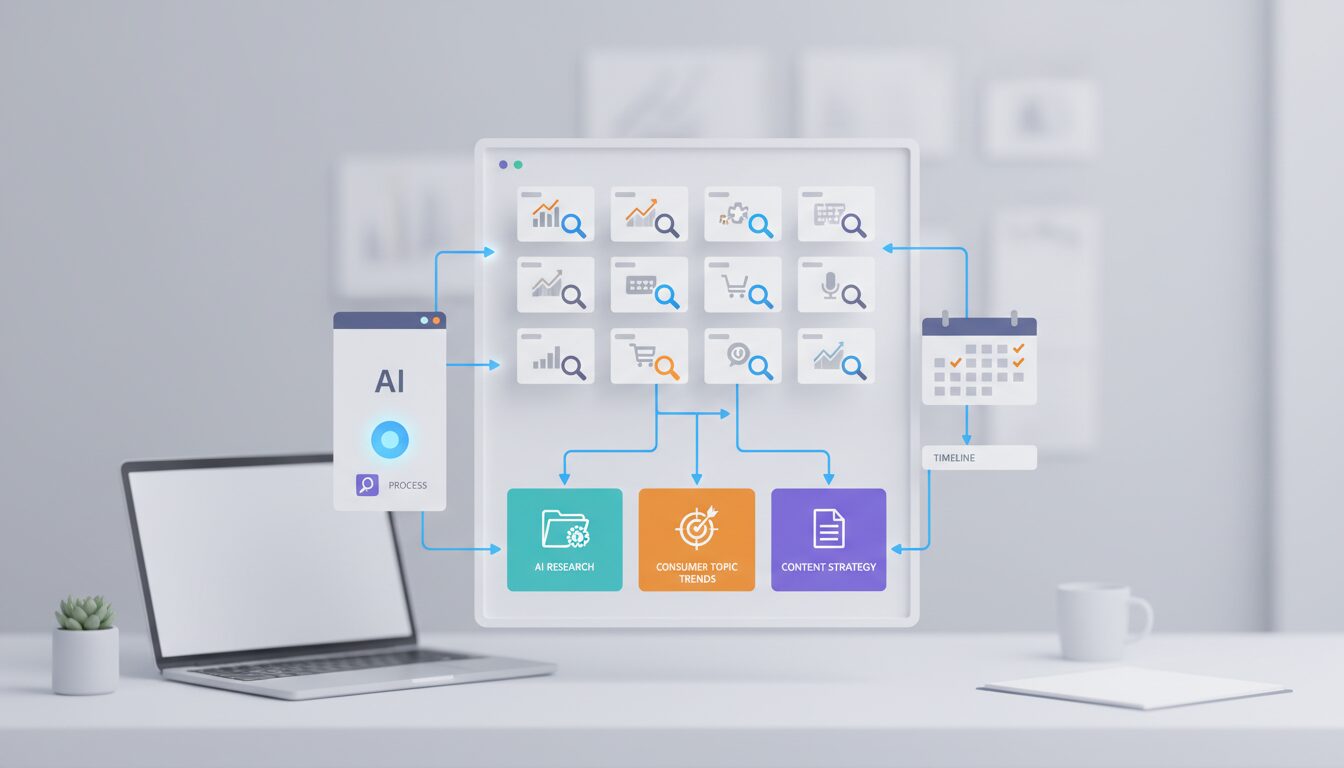
When you need to decide quickly in real work, the useful choice usually depends on the task itself rather than the tool name.
AI Market Research Drafts: Your Essential Checklist
AI isn’t just a buzzword; it’s fundamentally reshaping how we understand our markets. For professionals tasked with market research, this means a powerful new toolkit, but also a new set of best practices to master. The goal isn’t just to generate data faster, but to produce drafts that are accurate, ethical, and truly actionable.
How can you ensure your AI-powered market research drafts meet this standard? It starts with treating AI not as an autopilot, but as an incredibly capable co-pilot that still requires your strategic direction. This checklist will guide you through the essential steps to make that partnership work.
Quick Summary for Busy Readers
- AI amplifies market research by processing vast amounts of data, but human strategic oversight is non-negotiable for deriving actionable insights.
- You must clearly define your research objectives before deploying AI to avoid being buried in a mountain of irrelevant data.
- Prioritize data privacy and ethical considerations from the very beginning to build customer trust and ensure legal compliance.
AI Market Research Drafts: what to focus on first
In practice, AI Market Research Drafts is most useful when you match the tool to the task instead of expecting one tool to do everything equally well.
Laying the Groundwork: Defining Your AI Research Objectives
The most common failure in AI-driven research is a vague starting point. Sending an AI to “find interesting trends” is like asking a librarian to find “a good book” without any context. You’ll get something, but it probably won’t be what you need. AI performs best when given a focused, well-defined task.
Before you open a single tool, start with SMART objectives: Specific, Measurable, Achievable, Relevant, and Time-bound. Translate your broad business questions into specific problems that AI can help solve.
Broad Question: “What do customers think about eco-friendly products?”
AI-Solvable Objective: “Analyze customer reviews and social media comments from the last six months to identify the top three unmet needs in the sustainable packaging market for consumer goods.”
This clarity gives your AI a clear mission, ensuring the data it collects and analyzes is directly relevant to your strategic goals.
Selecting and Integrating Your AI Toolkit
Not all AI tools are created equal. The key is to match the right technology to the right research task. You wouldn’t use a hammer to turn a screw. Similarly, you need to select AI capabilities that align with your objectives.
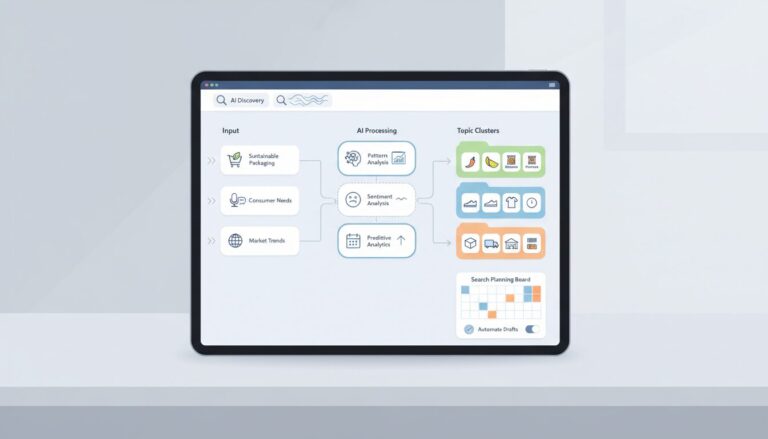
- For sentiment analysis: Use tools with Natural Language Processing (NLP) to understand the emotion and context behind customer reviews or social media posts.
- For predictive modeling: Employ Machine Learning (ML) to forecast future trends based on historical sales data, web traffic, and economic indicators.
- For visual trend spotting: Use computer vision to analyze images on social media to identify how your products are being used in the real world.
Once you’ve selected your tools, the next step is to feed them high-quality data. Connect your AI to diverse data sources for a comprehensive view of the market. This includes:
- Internal CRM data and sales records
- Social media feeds and online forums
- Competitor websites and press releases
- Industry reports and public databases
Ensure your data is clean and accessible. Inaccurate or incomplete data will only lead to flawed AI-generated insights, no matter how sophisticated the tool.
Configuring, Analyzing, and Human-Validating AI Insights
With your objectives set and tools integrated, it’s time to put the AI to work. This isn’t a “set it and forget it” process; it requires careful configuration and, most importantly, human validation.
1. Configure and Train: Start by setting the right parameters. Define the keywords, topics, and data sources for the AI to focus on. If you’re analyzing customer sentiment, train the model to recognize industry-specific jargon or slang to improve its accuracy.
2. Analyze the Output: AI tools will present findings in dashboards, reports, and visualizations. Your job is to look for the story within the data. Identify the key trends, surprising correlations, and anomalies that might not be visible through traditional methods. For example, the AI might find a correlation between a specific product feature and negative sentiment in a geographic region you hadn’t considered.
3. Apply Human Validation: This is the most critical step. AI can identify a pattern, but it can’t always explain the “why.” Cross-reference the AI’s findings with your team’s expertise. Does this trend align with what the sales team is hearing from customers? Conduct a small qualitative survey to add context to the quantitative data. Never take an AI-generated insight at face value without applying your critical thinking and industry knowledge.
Avoiding the Common Pitfalls of AI Market Research
Adopting AI can significantly speed up your workflow, but it also introduces new potential for error. Being aware of these common pitfalls is the first step to avoiding them.
- The Pitfall: Over-reliance on AI without human validation. AI can misinterpret sarcasm, miss cultural nuance, or perpetuate biases from its training data. This leads to flawed conclusions and poor strategic decisions.
Prevention: Always treat AI output as a draft. Have a human expert review and sanity-check the findings. Supplement AI data with qualitative insights from focus groups or customer interviews. - The Pitfall: Using AI without clearly defined research questions. This “garbage in, garbage out” scenario wastes time and resources, leaving you with a sea of irrelevant data and no actionable insights.
Prevention: Never start a project without first establishing the SMART objectives discussed earlier. A clear question is the foundation of a useful answer. - The Pitfall: Ignoring data privacy and ethical considerations. Using customer data without proper consent or anonymization can result in severe legal penalties, reputational damage, and a complete loss of customer trust.
Prevention: Implement a robust data governance policy from day one. Ensure strict compliance with data protection laws like GDPR and CCPA. Prioritize data anonymization and be transparent about how data is used.
Ethical AI: Building Trust and Ensuring Fairness
Ethical considerations are not an afterthought; they are central to responsible market research. As you integrate AI, you become a steward of the data it uses. Building trust with your customers and stakeholders requires a commitment to fairness and transparency.
First, prioritize data privacy. Anonymize personal data wherever possible and always ensure you have the proper consent for the data you collect and analyze. Second, actively work to mitigate bias. AI models learn from the data they are given, and if that data reflects historical biases, the AI will amplify them. Regularly audit your models and data sources to ensure they are producing fair and equitable insights, not just reinforcing old stereotypes.
Staying informed on evolving data protection laws and ethical AI guidelines is essential for maintaining compliance and building a research practice that is both effective and responsible.
Your Essential AI Market Research Checklist
Use this checklist before finalizing any AI-generated research draft:
- Have you clearly defined your research objectives and questions?
- Are your selected AI tools appropriate for the specific tasks at hand?
- Are all relevant and diverse data sources identified and integrated?
- Have you configured and trained your AI models effectively for your research scope?
- Is there a robust process for human validation and interpretation of AI-generated insights?
- Have you reviewed the output for potential biases?
- Are you fully compliant with all data privacy and ethical guidelines?
Think of AI as your most powerful research co-pilot, not a replacement for your strategic mind. It can navigate vast oceans of data and spot things you might miss, but you are still the captain who sets the destination and makes the final call. Master this partnership, and you’ll unlock an unprecedented level of market understanding, driving smarter, faster business decisions.
- [1]
Google Search Central Documentation
Official guidance for search intent and content structure
- [2]
Google SEO Starter Guide
Official guidance for page structure, titles, and search-friendly writing
- [3]
Google Trends
Official tool for topic interest and search trend research